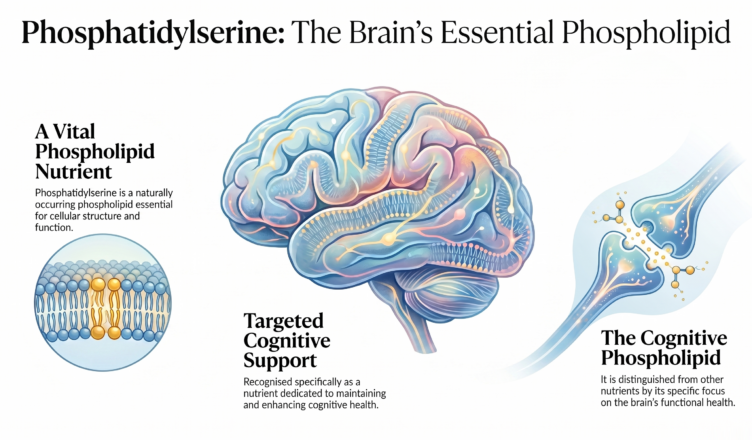
Phosphatidylserine (Cognitive Phospholipid Nutrient)
Phosphatidylserine (Cognitive Phospholipid Nutrient)
- Nomenclature and Definitional Framework
In the sophisticated landscape of clinical neuro-nutrition and pharmacology, the rigor of nomenclature serves as the primary safeguard for therapeutic precision. For the clinical practitioner, standardized terminology is not merely a linguistic formality; it is a prerequisite for ensuring that pharmacological interventions are accurately targeted and that research data is correctly translated into patient care. Precise naming conventions allow for the differentiation of specific molecular entities from broader lipid classes, thereby mitigating the risk of clinical misapplication.
The primary identity of the compound addressed herein is Phosphatidylserine. While the source context acknowledges the variant spelling “phosphatidylserin,” professional clinical documentation prioritizes the “Phosphatidylserine” designation for universal clarity. This formal nomenclature is essential to distinguish this specific biochemical entity from broader, less precise lipid categories such as “lecithins” or “general phospholipids.” In a clinical setting, utilizing the term Phosphatidylserine shifts the focus from a general macronutrient perspective to a targeted analysis of a specific bioactive molecule with unique pharmacokinetic properties and therapeutic potential.
This foundation of nomenclature provides the necessary clarity to move beyond simple naming into the complex taxonomic classification of the compound within biological systems.
- Taxonomic Categorization: The Cognitive Phospholipid Class
For a senior clinical pharmacologist, the strategic classification of a substance must bridge the gap between biochemical architecture and physiological outcome. Categorizing a nutrient by both its structural class (phospholipid) and its functional target (cognition) allows for a more sophisticated understanding of its role in neurobiology, particularly regarding its ability to influence membrane dynamics and signal transduction across the blood-brain barrier.
Following this dual-identity framework, the substance is classified as a Cognitive Phospholipid Nutrient. The following table delineates the taxonomic layers of this compound:
| Classification Layer | Descriptor | Clinical Significance |
| Functional Classification | Cognitive | Identifies the central nervous system as the primary site of action. |
| Biochemical Class | Phospholipid | Defines the lipophilic nature and structural role in cell membranes. |
| Source Identity | Nutrient | Establishes its role as a fundamental dietary or endogenous component. |
The “Cognitive Phospholipid” designation implies a specialized neurobiological role that distinguishes Phosphatidylserine from other lipids. As a “phospholipid,” the substance is recognized for its vital contribution to the structural integrity of cellular membranes. However, the “cognitive” prefix informs the practitioner that this molecule has a specific affinity for the neural systems governing memory, focus, and executive function. By synthesizing these structural and functional identities, the practitioner gains a comprehensive view of how the nutrient supports the fluid mosaic model of neuronal membranes, which is essential for optimal neurotransmitter receptor function.
This taxonomic clarity transitions the understanding of the compound from a general biological building block to its specific role as a fundamental nutrient for the brain.
- Nutritional Identity and Characterization
Ensuring targeted clinical application requires a granular identification of specific nutrients within the wider phospholipid family. Without this characterization, nutritional strategies remain broad and inefficient. The definitive identity of this substance, derived from its clinical and pharmacological profile, is presented as:
The Cognitive Phospholipid Nutrient.
The designation of Phosphatidylserine as a “nutrient” rather than a purely structural metabolite or an exogenous drug is a distinction of high clinical significance. From a pharmacological perspective, the “nutrient” status suggests that the compound is an integral part of the body’s metabolic requirement for maintaining cognitive homeostasis. While the source identifies it as such, the clinical interpretation of this label suggests a shift away from viewing the lipid as a passive structural element. Instead, it is framed as an active requirement—a substance that must be present in sufficient quantities to support the complex neuro-signaling environments of the brain. This elevates the compound’s status within a treatment protocol, framing it as a necessary substrate for cognitive health rather than an optional adjunct.
This nutritional identity serves as the final evidence base for integrating the substance into a professional clinical reference framework.
- Concluding Clinical Synthesis
This monograph has established a professional taxonomic and nomenclature framework for Phosphatidylserine, highlighting its unique position at the intersection of lipid biochemistry and cognitive science. By defining the compound through its specific nomenclature and its dual-layer classification, we provide clinicians with a precise roadmap for its application in neuro-nutritional protocols.
Critical Clinical Takeaways:
- Standardized Nomenclature: The compound is professionally recognized as Phosphatidylserine, with “phosphatidylserin” noted as a specific variant, ensuring precision in multidisciplinary clinical communication.
- Functional-Structural Dualism: Its classification as a “Cognitive Phospholipid” explicitly links its biochemical structure (phospholipid) to its therapeutic target (cognitive systems), emphasizing its role in neuronal membrane integrity.
The strategic impact of recognizing Phosphatidylserine as a standalone “Cognitive Phospholipid Nutrient” cannot be overstated. For the practitioner, this classification provides a dedicated conceptual space for the substance, acknowledging that its role in neurobiology is distinct from general fats. It highlights the necessity of the compound as a bioactive nutrient required for the maintenance of the brain’s structural and functional architecture.
Final Statement: Based on the provided clinical metadata and nomenclature, Phosphatidylserine is professionally categorized as the definitive Cognitive Phospholipid Nutrient.
- Nomenclature and Definitional Framework
In the sophisticated landscape of clinical neuro-nutrition and pharmacology, the rigor of nomenclature serves as the primary safeguard for therapeutic precision. For the clinical practitioner, standardized terminology is not merely a linguistic formality; it is a prerequisite for ensuring that pharmacological interventions are accurately targeted and that research data is correctly translated into patient care. Precise naming conventions allow for the differentiation of specific molecular entities from broader lipid classes, thereby mitigating the risk of clinical misapplication.
The primary identity of the compound addressed herein is Phosphatidylserine. While the source context acknowledges the variant spelling “phosphatidylserin,” professional clinical documentation prioritizes the “Phosphatidylserine” designation for universal clarity. This formal nomenclature is essential to distinguish this specific biochemical entity from broader, less precise lipid categories such as “lecithins” or “general phospholipids.” In a clinical setting, utilizing the term Phosphatidylserine shifts the focus from a general macronutrient perspective to a targeted analysis of a specific bioactive molecule with unique pharmacokinetic properties and therapeutic potential.
This foundation of nomenclature provides the necessary clarity to move beyond simple naming into the complex taxonomic classification of the compound within biological systems.
- Taxonomic Categorization: The Cognitive Phospholipid Class
For a senior clinical pharmacologist, the strategic classification of a substance must bridge the gap between biochemical architecture and physiological outcome. Categorizing a nutrient by both its structural class (phospholipid) and its functional target (cognition) allows for a more sophisticated understanding of its role in neurobiology, particularly regarding its ability to influence membrane dynamics and signal transduction across the blood-brain barrier.
Following this dual-identity framework, the substance is classified as a Cognitive Phospholipid Nutrient. The following table delineates the taxonomic layers of this compound:
| Classification Layer | Descriptor | Clinical Significance |
| Functional Classification | Cognitive | Identifies the central nervous system as the primary site of action. |
| Biochemical Class | Phospholipid | Defines the lipophilic nature and structural role in cell membranes. |
| Source Identity | Nutrient | Establishes its role as a fundamental dietary or endogenous component. |
The “Cognitive Phospholipid” designation implies a specialized neurobiological role that distinguishes Phosphatidylserine from other lipids. As a “phospholipid,” the substance is recognized for its vital contribution to the structural integrity of cellular membranes. However, the “cognitive” prefix informs the practitioner that this molecule has a specific affinity for the neural systems governing memory, focus, and executive function. By synthesizing these structural and functional identities, the practitioner gains a comprehensive view of how the nutrient supports the fluid mosaic model of neuronal membranes, which is essential for optimal neurotransmitter receptor function.
This taxonomic clarity transitions the understanding of the compound from a general biological building block to its specific role as a fundamental nutrient for the brain.
- Nutritional Identity and Characterization
Ensuring targeted clinical application requires a granular identification of specific nutrients within the wider phospholipid family. Without this characterization, nutritional strategies remain broad and inefficient. The definitive identity of this substance, derived from its clinical and pharmacological profile, is presented as:
The Cognitive Phospholipid Nutrient.
The designation of Phosphatidylserine as a “nutrient” rather than a purely structural metabolite or an exogenous drug is a distinction of high clinical significance. From a pharmacological perspective, the “nutrient” status suggests that the compound is an integral part of the body’s metabolic requirement for maintaining cognitive homeostasis. While the source identifies it as such, the clinical interpretation of this label suggests a shift away from viewing the lipid as a passive structural element. Instead, it is framed as an active requirement—a substance that must be present in sufficient quantities to support the complex neuro-signaling environments of the brain. This elevates the compound’s status within a treatment protocol, framing it as a necessary substrate for cognitive health rather than an optional adjunct.
This nutritional identity serves as the final evidence base for integrating the substance into a professional clinical reference framework.
- Concluding Clinical Synthesis
This monograph has established a professional taxonomic and nomenclature framework for Phosphatidylserine, highlighting its unique position at the intersection of lipid biochemistry and cognitive science. By defining the compound through its specific nomenclature and its dual-layer classification, we provide clinicians with a precise roadmap for its application in neuro-nutritional protocols.
Critical Clinical Takeaways:
- Standardized Nomenclature: The compound is professionally recognized as Phosphatidylserine, with “phosphatidylserin” noted as a specific variant, ensuring precision in multidisciplinary clinical communication.
- Functional-Structural Dualism: Its classification as a “Cognitive Phospholipid” explicitly links its biochemical structure (phospholipid) to its therapeutic target (cognitive systems), emphasizing its role in neuronal membrane integrity.
The strategic impact of recognizing Phosphatidylserine as a standalone “Cognitive Phospholipid Nutrient” cannot be overstated. For the practitioner, this classification provides a dedicated conceptual space for the substance, acknowledging that its role in neurobiology is distinct from general fats. It highlights the necessity of the compound as a bioactive nutrient required for the maintenance of the brain’s structural and functional architecture.
Final Statement: Based on the provided clinical metadata and nomenclature, Phosphatidylserine is professionally categorized as the definitive Cognitive Phospholipid Nutrient.