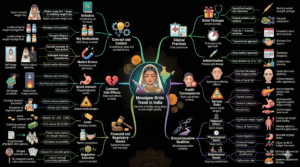
The New Pre-Wedding Essential
Across India’s urban centers, the pre-wedding checklist now frequently includes a medical jab alongside the makeup artist and the caterer. This shift has birthed the “Mounjaro Bride,” a term for women turning to powerful diabetes medications to accelerate weight loss ahead of their nuptials. It represents a startling transition from lifestyle modification to high-stakes medical intervention, driven by the relentless demand to look a certain way for a single day.
The Shift from Discipline to Transaction: “How Fast Can I?”
Weight loss in the bridal circuit is no longer a conversation about sustainable habits; it has become a demand for “how fast.” In clinics across the South Delhi circuit and Mumbai, wellness centers are rebranding GLP-1 medications—originally designed for Type 2 diabetes—into “pre-wedding transformation packages.” Establishments like Klarity Skin Clinic and Influennz are at the forefront, weaving these injections into traditional beauty services.
The nature of this trend is deeply transactional and high-pressure. During investigations where journalists posed as prospective clients, the sales tactics were found to be immediate and urgent. When inquiring about a June wedding, a common response from clinic receptionists was, “Bahut der kar li” (You’ve already delayed this). This manufactured urgency is used to push appointments for injections that staff promise will make a client “wedding-ready” in as little as a month.
The Biological Cheat Code: Understanding GLP-1 and GIP
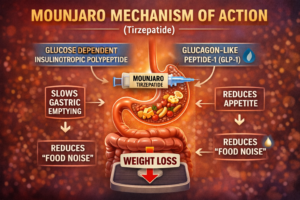
To understand the allure, one must look at the biological mechanisms of Mounjaro (tirzepatide) and Wegovy (semaglutide). While Wegovy is a single GLP-1 receptor agonist that signals fullness, Mounjaro is a “dual agonist” that mimics both GLP-1 and GIP (glucose-dependent insulinotropic polypeptide). This dual-action approach is why Mounjaro is viewed as the “superior” shortcut in India’s bridal circuit, offering more potent weight reduction than its single-hormone rivals.
Both drugs work primarily by slowing “gastric emptying“—a process where food moves slowly through the gut, creating a prolonged feeling of fullness. This effect effectively silences “food noise,” the constant, intrusive thoughts about eating. However, it is crucial to note that many of these injections are being used off-label, prescribed for cosmetic weight loss despite their primary regulatory approval being for the treatment of Type 2 diabetes.
The Aesthetic Trade-off: From the “Triangle of Youth” to “Mounjaro Face”
While the waistline shrinks, the face often pays a heavy price. In youthful facial structures, features form a “Triangle of Youth” with high cheekbones and a defined jaw. Rapid weight loss can cause this to invert into a “Pyramid of Aging,” where volume loss leads to sagging skin and sudden wrinkles. This phenomenon, known as “Mounjaro Face,” can leave a bride looking gaunt and older rather than “wedding-ready.”
There is a predatory, transactional irony to this aesthetic side effect. Many clinics now operate a “correction loop,” selling the very injections that cause facial sagging, then immediately upselling Juvéderm fillers or “volume restoration” packages to fix the damage. This cycle turns a medical intervention into a compounding series of cosmetic purchases, where the solution to one treatment’s side effect is yet another expensive procedure.
The Hidden Ledger: The Physical and Financial Cost of Speed
The convenience of a weekly jab comes with a heavy ledger of physiological risks. Clinical trials show that up to 22% of patients experience nausea, and 1 in 10 report vomiting. More severe risks include pancreatitis, stomach paralysis (gastroparesis)—where food hardens into life-threatening blockages—and an FDA “black box” warning regarding thyroid C-cell tumors. Crucially, these drugs are not recommended for those with a family history of Medullary Thyroid Carcinoma (MTC).
Financially, these treatments are positioned as luxury interventions. A single Mounjaro Kwikpen can cost between ₹13,125 and ₹25,781 per month depending on the dosage, with full pre-wedding courses often exceeding ₹50,000. Medical professionals are increasingly vocal about the lack of long-term clarity regarding these “laboratory-fresh” chemicals when used for cosmetic deadlines.
“Most GLP-1 treatments involve a once-a-week injection… These are fresh out of the laboratory. We are already seeing various complications being reported. What is worrying is the lack of long-term clarity, especially around more serious outcomes.” — Dr. Ranjit Bhosale, MCh Plastic, Aesthetic and Reconstructive surgery (AIIMS Delhi).
The “Day After” Reality: The Biology of the Rebound
The central irony of the trend is that the effects are largely temporary if the treatment stops after the wedding day. Once the injections cease, the body’s biology attempts to return to its previous “set point” as hormonal support is withdrawn. Gastric emptying returns to its normal pace, and the intrusive “food noise” that was suppressed by the medication inevitably returns.
Data from the SURMOUNT-4 clinical trial highlights this rebound effect with striking clarity. The study showed that patients who discontinued the medication regained a significant portion of their body weight—roughly 14%—within a year. This reinforces the clinical reality that obesity is a chronic condition requiring long-term management, rather than a one-time cosmetic fix for a single event.

Conclusion: Beyond the Single Day
The rise of the “Mounjaro Bride” has sparked a significant public and political backlash in India. Rajya Sabha MP Milind Deora recently flagged these pre-wedding packages as “unethical and dangerous,” questioning the repackaging of diabetes medication as a lifestyle shortcut. As medical interventions move into spaces shaped by extreme social pressure, the distinction between healthcare and a high-risk transaction continues to blur.
While these drugs are transformative tools for chronic illness, their casual use for wedding deadlines carries unquantified long-term costs. We are currently navigating a system designed to persuade rather than protect, where speed often overrides clinical caution. In the race to look perfect for one day, the most critical question remains: What happens the day after?